
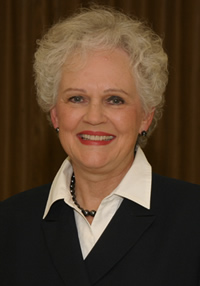
Great. Awesome. Fantastic. Just when I think this country is making progress in the realm of the racial divide, Texas Representative Betty Brown opens her big, rich, white mouth and craps all over the progress made by the election of President Barack Obama. (Click here for the story) In a nutshell, Rep. Brown was hearing testimony regarding voter identification legislation and voters of Asian descent, testimony from Ramey Ko, a representative of the Organization of Chinese Americans. Essentially, some Asian-descent voters had trouble voting because of their transliterated names and their forms of identification. Rep. Brown proceeds to say the following to Ko: “Rather than everyone here having to learn Chinese — I understand it’s a rather difficult language — do you think that it would behoove you and your citizens to adopt a name that we could deal with more readily here?” Rep. Brown shoved her foot even farther down her mouth when she continued, saying, “I see a need here for young people like you, who are obviously very bright, to come up with something that would work for you and then let us see if we can’t make it work for us.”
(Now, before I go on my tirade, allow me set the record straight and say that I don’t believe in turning every little quote or statement into a racial issue. I’m not that sensitive. Further, I believe that racism is often a two-way street and that reverse racism is much more rampant that is openly acknowledged. Therefore, the only way to eliminate such insensitivity is for EVERYONE — regardless of skin color, political affiliation, ethnic heritage, sexual orientation, economic standing — to stop all this “us vs. them” nonsense. How about instead of “versus,” we change it to a “with” or an “and.” “Us and them;” “you with me.” It may sound trite and idealistic, but the way I see it, a little idealism, a little hope, is never a bad thing. Differences will abound, there’s no denying that. But part of what has made America great is that we have embraced our differences and made those individualities work for the common good, not against it.)
OK, back to the regularly scheduled rant. (Also check out Rachel Farris’ editorial about the story here.)
First of all, “you and your citizens?” Thanks for separating “you” from us. Translated: you = minorities, us = the white majority in position of political power. Ugh. Wake up, Mrs. Brown, it’s 2009!! Your “us” and “them” statement, no matter how it was meant, is soooo 1950’s. (Then again, so is your haircut…yup, it’s gettin’ personal.)
Secondly, last I checked, no one is “behooved” to changed their name in this country. EVER. If that were the case, Mrs. Brown, we’d all have Native American names, or have you forgotten the fact that European settlers weren’t the first ones here?
And then Brown’s spokesperson, Jordan Berry, had the gall to say that Democrats are blowing the statement out of proportion. Um, excuse me, Mr. Berry, I don’t really see how else to interpret Mrs. Brown’s statement other than as racially insensitive. And what’s even more disturbing is that your saying just the Democrats are blowing this out of proportion. What about other Republicans? Aren’t they upset about this? If not, they should be. But politicall party affiliation is clouding the real issue here; it has nothing to do with Republicans vs. Democrats. EVERYONE should be incensed by Mrs. Brown’s remarks. It’s unacceptable for someone in public office, someone who was elected by the very people she just insulted, to even think about saying what she did, much less openly suggest it on the floor of the Texas House. Brown’s remarks represent such a myopic, closed-minded view of how American society functions. Don’t like all the diversity, Mrs. Brown? Then America isn’t the place for you. I hear Iceland is nice and homogeneous (nothing against Iceland).
Granted, some Asian names are tough to pronounce. Then again, names like Neugebauer, Luetkemeyer, and Sensenbrenner (these are all real names of HoR members; look ’em up here) — clearly names of European descent (read: white) — don’t exactly roll off the tongue. Sorry, Mrs. Brown, was “Ko” a little to difficult to pronounce? I have an idea, ma’am. Since you are the representative, why don’t you change your name to something more familiar to your constituents. “Bigot” sounds about right.
Angry? You’re damn right I am.
 Christopher Endrinal
Gyargh–so sorry for the multiple posts.
Regarding “you and your people”: admittedly it was a very clumsy thing for her to say, and I’ve been called half-Vietnamese, half-American more times than I care to count (my mother is a naturalized American), but I try to extend some mercy to the well-intentioned.
Many white Americans remain confused by what they sometimes see as Asian-Americans’ self-separating, self-distinguishing, even self-isolating nomenclature–that is, it is Asian-Americans, not Euro-Americans, who insist on being defined as “other”. Many white Americans wonder why Asian-Americans need the ethnic qualifiers.
Of course, I think we can both agree that there are good reasons for this kind of ethnic nomenclature–but it can nevertheless leave many well-meaning white folks trying to understand exactly how Asian-Americans wish to be perceived and discussed, with white people fumbling to discern proper protocol during always-sensitive discussions of race and ethnicity.
Watching the video, Ms.Brown seems to be really making an effort to listen, and speak carefully and thoughtfully, if straightforwardly. In referring to “you and your citizens”, she seems to me to be (clumsily, perhaps) making the choice to address Mr. Ko (and his self-defined constituency) personally (“you”) as opposed to impersonally (“them”). I can easily imagine that she was concerned that it would be referring to “Asian-Americans” that would sound more alienating by accentuating Asian-Americans’ “other-ness”. I give her the benefit of the doubt that she was trying to choose the most respectful way to communicate, and perhaps mad an awkward turn and Albuquerque.
Thanks for your feedback. You bring up some good points. Admittedly, much of my entry was a knee-jerk response to Rep. Brown. I think the moral of the story here is that there’s got to be a better to include those who are eligible, and not just in the voting realm, but other sectors of society.
Thanks for you kind response, Chris. I agree with you, and for the record, I do tend to disagree with Rep. Brown’s proposals, which can fairly be argued are a bit unsympathetic and perhaps myopic.
Admittedly, I spent the second half of my growing up in Hawai’i, where Asians are the majority, and I’m just a half-breed, so I’m probably not as sensitive to the issues and sense of ostracism faced by Asians on the “mainland”. No one in Hawai’i ever commented on how good my English was 🙂
On lighter and pretty much unrelated note, I spent the majority of my young childhood in the Philippines (moving away when I was 10), and I still eat balut and bagoong (with green mango) on a regular basis. Mabuhay, bitches!
Another note: Ms. Brown didn’t address names like Luetkemeyer because apparently, no Luetkemeyers were having issues at the polling stations. If someone came to her asking her to address a similar issue (eg, his naturalization papers named him as Jakob Luetkemeyer but his driver’s license said Jim Looter), then I don’t doubt she’d make a similar suggestion.
An assertion of racism in this case is grossly unfounded, in my opinion.
I’m a native-born Vietnamese-American (admittedly only half, raised by my immigrant mother), and I think Ms. Brown’s getting a bad rap (mainly because I think her meaning is being misinterpreted). Were she suggesting that Asian immigrants adopt Anglicized names, I’d reject such a suggestion unreservedly. But that’s not what she suggested, and went out of her way to say so: “I’m not talking about changing your name–I’m talking about transliteration…”. She made this clear during the hearing and in subsequent statements.
Some Chinese-Americans experienced challenges at the polling stations because the namnes on their IDs did not match the names on their naturalization papers. Ms. Brown was simply suggesting that names/transliterations be consistent from document to document, not that they should be anglicized.
The inconsistencies were generally due to one of two things:
a) The most common issue was, ironically enough, that it was the adopted americanized names on voters’ documents (driver’s license, for example) which didn’t match their naturalization papers. For example, a Vietnamese person might be naturalized as Hoai Nguyen, but have Bobby Wynn on his Driver’s license. In such a case, Ms. Brown’s proposed solution would be to use his Vietnamese, not americanized name on his driver’s license.
b) Some people choose to transliterate their names differently on various documents. For example, someone’s naturalized name might be Yi Seung-man, but he may transliterate it Syngnman Rhee on one document, and Singman Ri on another. All three are equivalent transliterations of the same name.
Ms. Brown made it clear she was not suggesting that Chinese voters change their true Chinese name–just that that they alter how they transliterate it when it’s inconsistent with the transliteration on another document.
Regarding her statement, “Rather than everyone here having to learn Chinese — I understand it’s a rather difficult language — do you think that it would behoove you and your citizens to adopt a name that we could deal with more readily here?”: she was referring to the linguistic knowledge pollworkers would need to discern, for example, that Yi Seung-man and Syngman Rhee represented the same name (this is actually a Korean name, but the point stands). She was not suggesting that Syngman choose a less ching-chongy name.
She asked Mr. Ko, “do you have any suggestion for us, something that would help the Chinese community, that would be easier on you?”, and it was he who then asked her to address the challenges presented by nominal inconsistencies at polling stations. Watching the video, I found Ms. Brown perfectly reasonable, even if I ultimately believe there’s a better solution. She wasn’t argumentative or on some tirade–she was civil and courteous, addressing an issue at Mr. Ko’s request, and let him know she’d be happy to consider any solutions Mr. Ko wanted to present (he didn’t really have any). After discussing her suggestions (both she and Mr. Ko were very civil), she courteously welcomed him to return with a solution he thinks would work.
It’s common for naturalized citizens to eventually adopt “Western” names for common use (my naturalized cousin goes by “Bobby”), and it is a sad irony that such an attempt at assimilation, so often insisted upon by white Americans, would then be the very thing to hinder their ability to vote. I suggest that naturalized citizens in Texeas be allowed to use “americanized” or re-transliterated names on documents such as their driver’s license, with their naturalized name printed secondarily somewhere on the document.
Certainly we’re free to disagree with Ms. Brown’s suggestion, but we should at least understand what it is with which we’re disagreeing. Anti-Asian bigotry and xenophobia, both subtle and not-so-subtle, are alive and well in the U.S., but reactionary strawman-punching only undermines the helpful sympathies we’d like to create.
More importantly, why are we we voting for non-whites?
Very well put, babe. It is an outrage and the rant is well deserved.
Two things: I love and totally agree with your point about names and Asian names are certainly not the only ones that are tricky to work out. And the part about us all having Native American names! It reminded me of an episode of NYPD Blue when Andy Sipowicz (giant racist that he is) says, “Why can’t they stay in their own country? Freakin’ immigrants.” And David Caruso’s character goes, “Oh right. I forgot Sipowicz was a Native American name.” HIlarious.
Two: I don’t understand where the term “reverse racism” came from. It’s set up to mean that racism in unidirectional and can only come from whites. Racism is racism, no matter who you are or who you’re being racist about. Not picking on you, you understand, I just never got that.
And a third for good measure: Well written, well said, well ranted.
And I love you. 🙂
Good point with the “reverse racism” thing. Perhaps the term came from the fact that racism from whites against non-whites was (is…sadly) so prevalent that is was only natural to label racism going the “other way” — equally as heinous — as the “reverse.” I guess I just fell into the trap against which I was ranting. You’re right: racism is racism, plain and simple. It’s wrong, no what direction it’s flowing or who the victims are.
So, let me understand…
“The fact that racism from whites against non-whites was (is…sadly) so prevalent that is was only natural to label racism going the ‘other way’ ” as reverse racism.
Please tell me–what else do whites do? I’m curious. Also can you please clarify if you mean to include those of hispanic/latino descent as white, or are you only talking about Europeans.
Thanks, ya big bigot.
🙂
Love,
Marty